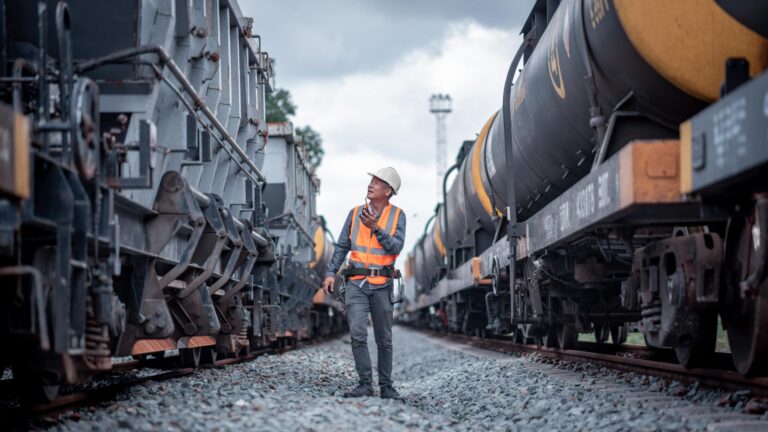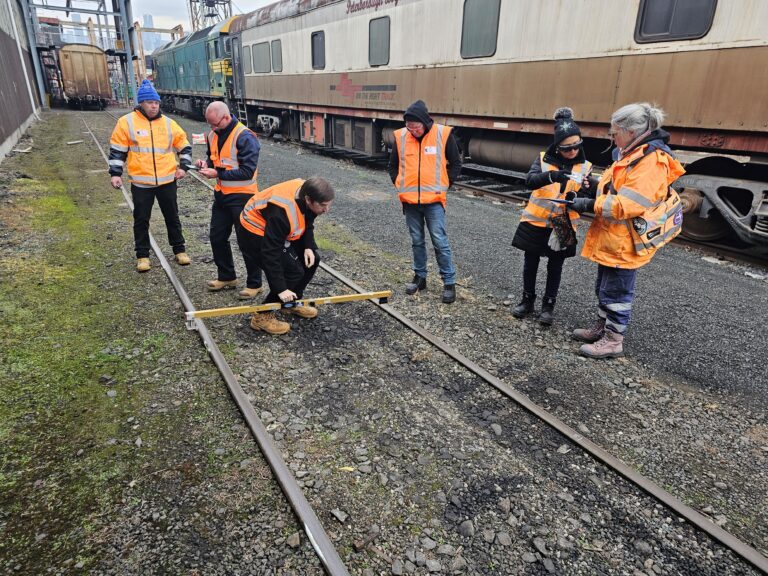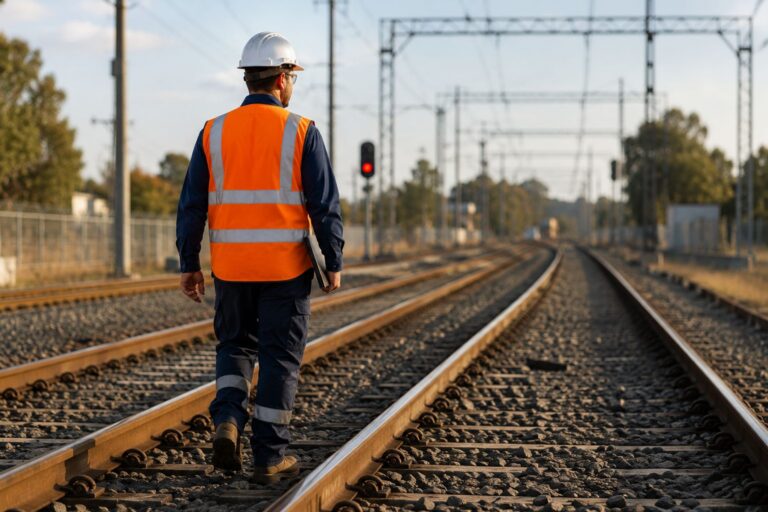
How Safeworking Procedures Protect Rail Workers
Safeworking procedures protect rail workers by establishing clear rules for managing risks associated with train movements, track access and worksite activities. These procedures help ensure that workers understand when and where they can work, which protection arrangements apply and how to communicate safety-critical information. Safeworking can involve track protection, authorised access, worksite briefings and specific responsibilities for competent personnel. Requirements vary between rail networks and activities. Appropriate training helps workers understand and follow the procedures relevant to their roles.
Australia’s rail industry operates in environments where workers may be exposed to moving trains, heavy machinery, electrical infrastructure and other workplace hazards. From track maintenance and construction to inspections and operational activities, rail work requires carefully coordinated safety arrangements. Safeworking procedures provide a structured approach to managing these risks. Rather than relying on individual judgement or assumptions, workers follow established rules designed for the railway environment in which they operate.
What Are Safeworking Procedures?
Safeworking procedures are established rules and processes used to manage risks associated with railway operations and activities performed on or near railway infrastructure. They help coordinate train movements, track access, worksite protection and communication between relevant personnel. The procedures used depend on the rail network, operating environment and activities being undertaken. Some procedures apply to general rail safety, while others involve specialised responsibilities that require additional competency and authorisation. Workers must understand the requirements relevant to their duties rather than assuming the same procedures apply across every Australian rail network.
Why Are Safeworking Procedures Important?
Rail vehicles operate on fixed tracks and can require considerable distances to stop. This means workers cannot rely on trains being able to stop quickly or move around an obstruction. Safeworking procedures help manage these risks by establishing arrangements that control how work and rail movements interact. They also provide a consistent framework for communication, responsibilities and decision-making. Without clear procedures, workers may make incorrect assumptions about whether a track is safe, where they are permitted to work or who is responsible for particular safety arrangements.
Managing Access to Railway Tracks
One of the most important functions of safeworking is controlling access to railway tracks and surrounding infrastructure. Workers should never assume that a track is safe simply because no rail traffic is visible. Appropriate access requirements must be satisfied before entering areas where rail safety risks exist. Depending on the network and activity, these requirements may include rail safety competency, induction, authorisation and established protection arrangements. Workers also need to understand where they are permitted to work and any restrictions applying to the area. Before entering a rail corridor, workers need to understand the safety requirements and access procedures that apply to their role. Who Needs Safely Access the Rail Corridor Training? explains which rail workers and contractors may require foundational training to access railway environments safely.
How Track Protection Supports Safeworking
Track protection is a key part of safeworking when activities could expose workers to rail traffic. Protection arrangements are selected and implemented according to applicable network rules and worksite conditions. Depending on the network, these arrangements may involve specific authorities, protection methods and designated personnel. The purpose is to manage the interaction between work activities and rail movements. Workers must understand the protection arrangements relevant to their activities and remain within established worksite boundaries. Protection should never be assumed to be in place without the confirmation required by applicable procedures.
Role of Protection Officers
Protection Officers perform important responsibilities in managing worksite protection. Depending on their competency and network authorisation, they may assess worksite conditions, implement permitted protection arrangements, communicate with relevant rail personnel and brief work groups. Different Protection Officer competency levels may involve different responsibilities. A worker qualified for one level should not assume they are authorised to perform the duties associated with another. Protection Officers must follow the rules applying to their network and remain within the limits of their competency.
Why Worksite Briefings Are Essential
Worksite briefings help workers understand the arrangements that apply before activities begin. A briefing may cover planned tasks, relevant hazards, protection arrangements, worksite boundaries and individual responsibilities. Workers need to listen carefully and understand what is expected of them. If information is unclear, questions should be raised before work proceeds. A briefing should not be treated as an administrative formality. It is an important part of establishing a shared understanding of how work will be carried out safely.
Understanding Worksite Boundaries
Safeworking arrangements may establish specific boundaries within which work can occur. These boundaries are important because protection may only apply to a defined area. Moving outside the established worksite without appropriate authority can expose workers to risks that were not covered by the original arrangements. Workers should understand the limits of their work area and follow instructions from appropriately competent personnel. If activities need to extend beyond the existing boundaries, the change must be managed according to applicable procedures.
Managing Changes During Rail Work
Worksite conditions do not always remain the same. Tasks may move to another location, additional personnel may arrive or operational conditions may change. These developments can affect the suitability of existing protection arrangements. Workers should communicate relevant changes rather than independently adjusting safety arrangements. Appropriately competent personnel can then determine what action is required under the applicable procedures. This helps ensure safeworking arrangements remain appropriate as activities progress.
Preventing Unauthorised Rail Movements
Safeworking procedures help coordinate and control rail movements according to the applicable operating rules. Depending on the network, these arrangements may involve signalling systems, movement authorities, operational instructions and communication between authorised personnel. Workers must not assume that a train or rail vehicle can move simply because a section of track appears clear. Movements need to occur under the relevant authority and procedures. These requirements help manage potential conflicts between rail vehicles and other activities.
How Safeworking Supports Maintenance Activities
Railway infrastructure requires regular inspection, maintenance and renewal. These activities may place workers close to operational railway tracks. Safeworking procedures help establish the arrangements under which maintenance personnel can access and work around infrastructure. Track workers, technicians, contractors and other personnel need to understand the requirements relevant to their tasks. Appropriate protection and communication allow maintenance activities to be coordinated with railway operations. This is essential for managing risks while keeping important infrastructure work organised.
Working Safely Around Rail Machinery
Rail maintenance and construction can involve specialised machinery, track vehicles and mobile plant. These activities introduce hazards beyond train movements alone. Workers may need to follow exclusion zones, equipment operating procedures and instructions from relevant personnel. Some machinery requires specialised training or authorisation before operation. Safeworking arrangements need to account for the interaction between workers, equipment and railway operations. Workers should never assume that a plant operator has seen them or that machinery can be approached without following the applicable procedures.
Safeworking in Electrified Rail Environments
Electrified railway networks can present additional hazards involving overhead wiring and other electrical infrastructure. Protection from rail traffic does not automatically provide protection from electrical hazards. Workers must understand the electrical safety requirements relevant to their activities. Electrical isolation, where required, must be established and confirmed by appropriately authorised personnel under applicable procedures. Workers should never assume equipment is de-energised because trains are not operating nearby. Different risks require appropriate controls, and workers must follow the requirements applying to each hazard.
Network-Specific Safeworking Requirements
Australia has multiple rail networks with different operating environments and procedures. Although rail safety legislation provides a national regulatory framework, individual networks may have specific safeworking rules and competency requirements. A worker trained for one network should not automatically assume the same procedures apply elsewhere. Additional induction, training or authorisation may be required. This is particularly important for rail contractors who work across different jurisdictions or infrastructure managers. Understanding the correct network requirements helps prevent mistakes caused by applying unfamiliar or outdated procedures.
Importance of Practical Safeworking Training
Safeworking involves applying knowledge in situations where accurate decisions and communication are essential. Practical training allows participants to develop skills through relevant activities and scenarios. Depending on the course, learners may practise identifying hazards, communicating safety-critical information or applying procedures associated with their competency. Assessment helps determine whether participants can demonstrate the required knowledge and practical skills. This approach supports the development of workplace competency rather than relying solely on classroom attendance.
Why Safeworking Competencies Must Remain Current
Rail procedures and operational requirements can change over time. Workers may also move into roles involving additional responsibilities. Some safeworking competencies are subject to recertification, reassessment or other currency requirements. These arrangements help confirm that workers continue to meet the expectations associated with their duties. The exact requirements depend on the competency and network. Workers should monitor their training records and remain familiar with the current procedures applying to their role.
Common Mistakes That Can Compromise Safeworking
Safeworking can be undermined when workers make assumptions, ignore instructions or operate outside established arrangements. Common problems include assuming a track is safe, misunderstanding worksite boundaries, failing to communicate changes and undertaking tasks beyond personal competency. Distraction and fatigue can also affect concentration and decision-making. These issues highlight why procedures must be consistently followed, even during familiar or routine activities. Workers should raise concerns and seek clarification rather than taking shortcuts that could compromise safety. Even experienced rail workers can make mistakes when assumptions replace established procedures or important safety information is overlooked. Common Mistakes That Can Compromise Rail Safety explores common workplace errors and the importance of communication, situational awareness and procedural discipline.
How Safeworking Builds a Stronger Safety Culture
Safeworking procedures are most effective when supported by positive workplace behaviours. Workers need to understand why procedures exist and recognise their role in maintaining safety. A strong safety culture encourages clear communication, hazard reporting and compliance with established requirements. It also supports workers who raise concerns or ask questions when information is unclear. Supervisors, trainers and organisations contribute by providing appropriate training, resources and safety systems. Together, these practices help make safeworking an everyday responsibility rather than simply a written requirement.
Safeworking procedures protect rail workers by establishing structured arrangements for managing rail movements, track access, worksite protection and safety-critical communication. These procedures help workers understand their responsibilities, recognise hazards and follow the controls required for their activities. Effective safeworking depends on appropriate planning, competent personnel, clear communication and consistent compliance with network rules. Through suitable training, practical assessment and ongoing professional development, rail workers can strengthen the knowledge and behaviours needed to contribute to safer railway environments.
-
10 Ways Railway Training Can Boost Your Career
With the right training and development, you can gain the skills and knowledge you need to advance your career in rail and take advantage of new job opportunities.
-
RISSB Derailment Investigation and Analysis Workshop
Investigating a derailment is a complex process. Investigations must be conducted in a structured and thorough manner to correctly identify the causes of derailment…
-
What Happens If You Don’t Have a USI
A Unique Student Identifier (USI) is required for most nationally recognised training in Australia. If you do not have a USI, your training provider…